William Compton
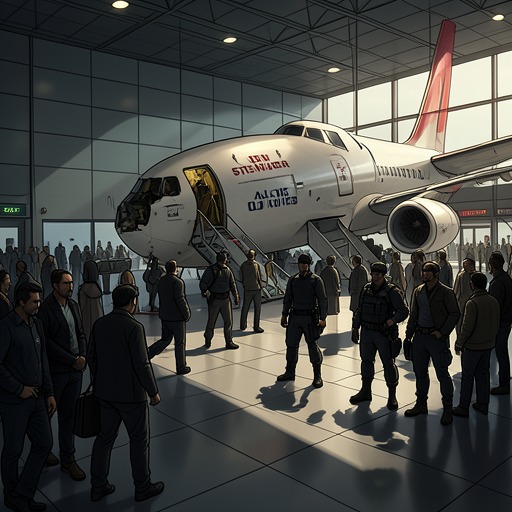
All the Old KnivesWilliam Compton, known among his colleagues as Bill and nicknamed Wild Bill, is a senior operations officer at the Vienna station whose career contrasts with his deteriorating private life. In December 2006 he can still recover his professional authority when a threat demands attention, but his colleagues see a man increasingly diminished by his marriage. Years later, his account of the Flight 127 crisis reveals both the station’s uncertainty about how information reached the hijackers and the emotional cost of revisiting that uncertainty.
Identity and Background
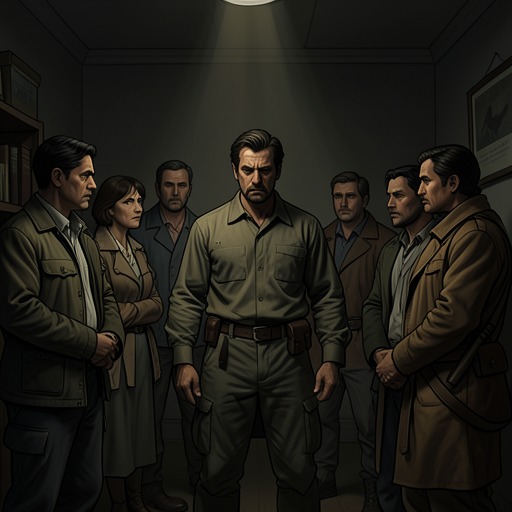
In December 2006, Compton works as a case officer under Victor Wallinger at the Vienna station, an office operating almost entirely under diplomatic cover. He is one of two operations officers, alongside Ernst Pul; Leslie MacGovern handles collection management, while Owen Lassiter works with codes. Compton is therefore part of a compact station team, where a major lead or an internal suspicion quickly becomes a shared problem.
Celia Favreau presents him as an aging commander shaped by long institutional memory. He remembers the original Wild Bill Donovan, the disastrous parachute drops in Albania and Czechoslovakia, the humiliations of Vietnam, and the false dawn of perestroika. The recollections give his nickname an ironic weight: he is associated with a lineage of bold intelligence work, yet the Compton observed in Vienna has become tired and, in his domestic life, unusually compliant.
His position in the office is not simply that of a diminished veteran. Favreau says that Sally Compton’s demands bend him too easily and that the staff do not take his commands particularly seriously. At the same time, she calls him an excellent boss. That judgment complicates the picture: his colleagues’ irreverence and his private weakness coexist with genuine professional value, rather than cancelling it out.
Work and the Return of Command
Compton’s use of work as refuge is clearest when an old lead comes back into view. Recalling a 2004 TRIPWIRE report about an alleged al-Qaeda cell in Salzburg, he explains that the station had spent considerable time with the Interior Ministry trying to prompt a raid on a warehouse that proved empty. The failed operation has made him wary of another dramatic claim. He estimates an eighty-percent chance that the source is offering another fabrication, a judgment that reflects both accumulated experience and the institutional cost of chasing bad intelligence.
A Europol message changes the balance. It reports that a man named Mashood Al-Fakeeh, traveling on a Saudi passport, arrived in Barcelona from Jordan two days earlier. Analysts believe the name conceals Ilyas Shishani, a Chechen radical reportedly associated with Ansar al-Islam. The possibility that Shishani is an operational planner lent to Aslim Taslam for TRIPWIRE’s proposed airline-related event gives the report a significance the earlier Salzburg lead lacked.
Compton needs no further prompting. After reading the message, he looks directly at Favreau, nods, and walks to Wallinger’s office. The small sequence marks a visible shift: the man who had been wary and weary is again acting as an officer with a decision to make. In the subsequent response, he and Favreau call agents and organize their sources in spreadsheets, while she arranges meetings with two women from the Muslim community. Compton’s return to command is practical rather than triumphant; it takes the form of coordination and an immediate turn toward the work.
Marriage, Health, and Exposure
The contrast between Compton’s working self and his private life appears in his physical condition and his fears. When a forwarded Europol message reaches the station, Favreau sees him as badly depleted: his eyes are hollow, his lips slack and damp, and his wrists puffy. He tells her that Sally is going to kill him. His words connect his anxiety to his marriage, while the bodily details suggest that the strain is becoming visible to colleagues.
Later, Henry Pelham meets Compton in a pub and orders a Newcastle; Pelham initially chooses Coke, then asks the waitress to add a little rum after seeing Compton’s worried expression. Pelham sees a pale, hunched man whose life appears governed by his wife’s wishes, a stark contrast with the national service and international affairs that once defined him. Compton’s condition also unsettles Pelham, who is beginning to imagine his own future outside intelligence work and fears that he could come to resemble the man before him.
Compton discusses his wife’s health, his attempt to leave her, chest pains, blood, and a hospital visit. When the conversation turns to the Vienna crisis, he says that he has nightmares about those days and wakes with tremors about once a week. The account establishes recurring distress, not simply a single uneasy recollection. Pelham responds coolly, pressing him to answer questions rather than trying to make him comfortable; Compton’s increasing anxiety is part of the circumstances under which the account emerges.
The Leak Inquiry and the Limits of His Account
Pelham presents himself to Compton as concerned about a young Interpol analyst raising serious issues and says the station must establish the facts before the analyst does. Compton agrees to help. Unlike the explanation Pelham gives Favreau, this is not framed to Compton as a mere bureaucratic exercise intended to satisfy a foreign agency. Pelham’s questioning is purposeful: he draws Compton back to the station’s response to Ahmed’s final message and to the doubts surrounding the hijackers’ communications.
Compton says the station noticed a difference between Ahmed’s final message and the earlier ones, understood what it might mean, and chose not to say so aloud. Before Compton left that night, Wallinger called him in to discuss the unresolved problem. Owen Lassiter was present as well. Their central question was whether the embassy was leaking information to the hijackers; if it was not, they had to consider who else could be responsible.
The alternatives Compton recalls show how the station tried to make sense of evidence that did not settle the matter. The hijackers’ use of Russian initially raised the possibility of Russian assistance, but Compton identifies Russian as Shishani’s preferred language and dismisses the idea that Russia would help a Chechen terrorist. The team also considered London because six British nationals were aboard the aircraft. Lassiter pointed out that the British embassy was keeping out of the dealings and would not know what to tell the hijackers, weakening that explanation too. Compton adds that they could still have been mistaken: perhaps Ahmed was alive and had merely changed his use of articles and prepositions, or perhaps the apparent change had another explanation. His recollection preserves the uncertainty rather than resolving it.
Narrative Role and Change
Compton’s arc in the available account is a movement between depletion and renewed function, not a settled recovery. In the office, the Shishani lead briefly restores the decisiveness that colleagues might otherwise overlook. In his marriage, and in Pelham’s later description of him, he appears trapped, anxious, and physically unwell. His habit of retreating into work helps him act when a consequential lead arrives, but it also sits beside the unresolved pressures that have narrowed his private life.
His testimony also makes him a conduit between two moments in the investigation: the station’s immediate recognition that Ahmed’s message had changed, and Pelham’s later effort to determine whether someone inside the embassy had betrayed the hijackers’ confidence. Compton supplies the names, competing theories, and reasons those theories faltered, but the account provided here does not establish who leaked information or what ultimately happens to Compton. His significance lies in the tension he embodies: an experienced officer can regain command in a crisis while remaining deeply compromised by the life he returns to afterward.